
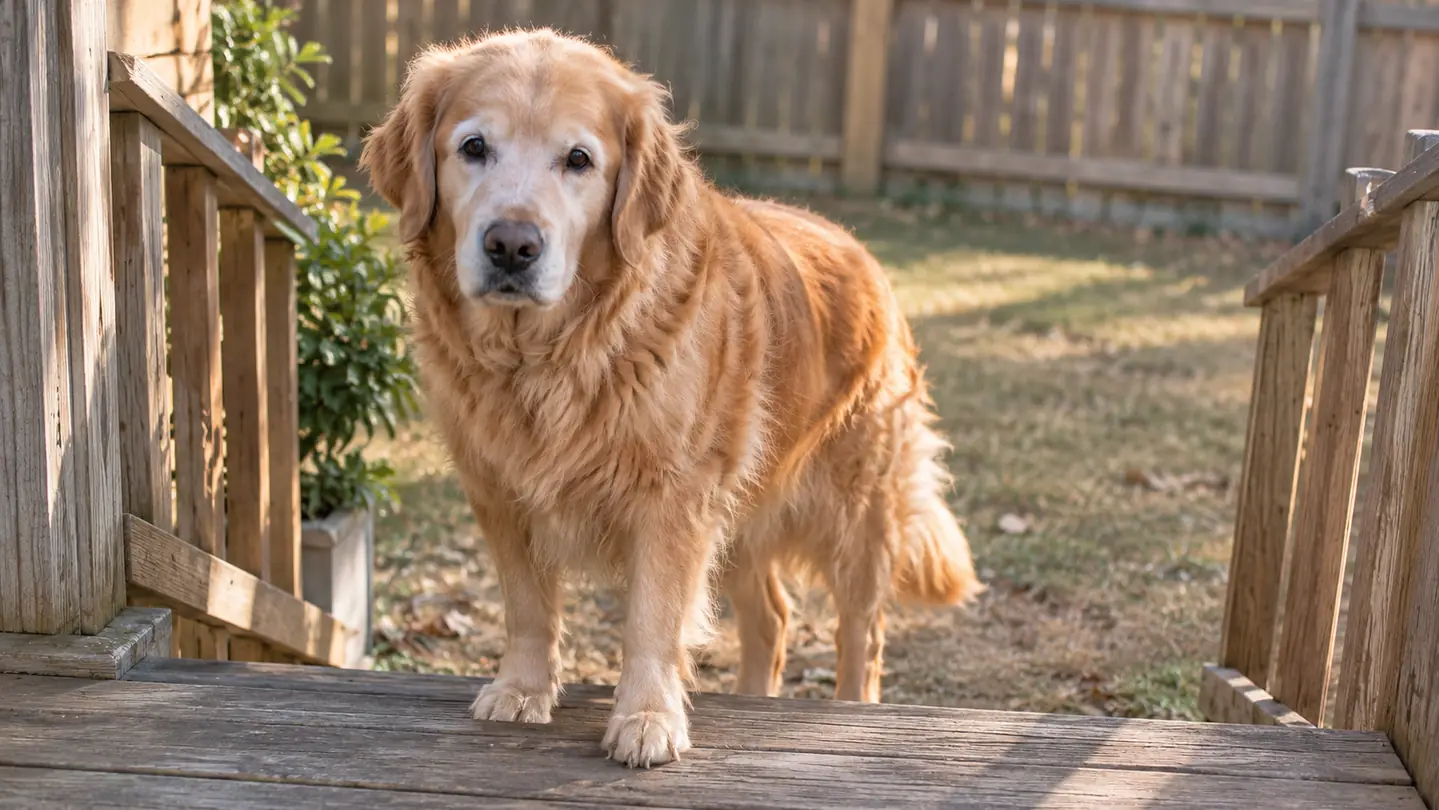
Bodhi is nine years old, seventy-four pounds, and until about a year ago he met the back steps at a trot. Now he stands at the top of them and thinks about it. That pause is what sent me looking, first to our vet, then to the wall of joint chews at the pet store, and finally to a bottle of Cosequin from Nutramax Laboratories. I have given it to him daily for a little over seven months. He is still nine, still stiff some mornings, and still my hiking partner. But the pause at the top of the stairs is shorter than it was, and I can tell you roughly when it got shorter and what I think did and did not cause it.
Let me be clear about who is writing this. I am a real estate agent in Ventura County. I hike local trails on weekends, walk the beach most mornings, and I am not a veterinarian. Nothing here is medical advice. I ran the whole plan past our vet before Bodhi swallowed the first tablet, and you should do the same, because a stiff dog and a hurt dog look similar from across the kitchen and only one of them needs a supplement. What I can give you is a plain record of seven months, the timeline nobody mentions in the reviews, and the questions I would ask before spending money on this.
The Quick Verdict
A chewable glucosamine and chondroitin tablet that quietly reduced Bodhi's morning stiffness over about ten weeks. Slow, unglamorous, and worth it for a stiff older dog. Not worth it if you are hoping for a fast fix or if your dog has an injury rather than wear and tear.
Amazon Check Today's Price →The tablet that shortened the pause at the top of the stairs
Cosequin is a chewable joint supplement built on glucosamine hydrochloride and sodium chondroitin sulfate, from Nutramax Laboratories, a company that has been making pet supplements for over 25 years. Ask your vet about the right amount for your dog's weight before you start.
Amazon Check Today's Price on Amazon →How I've Used It
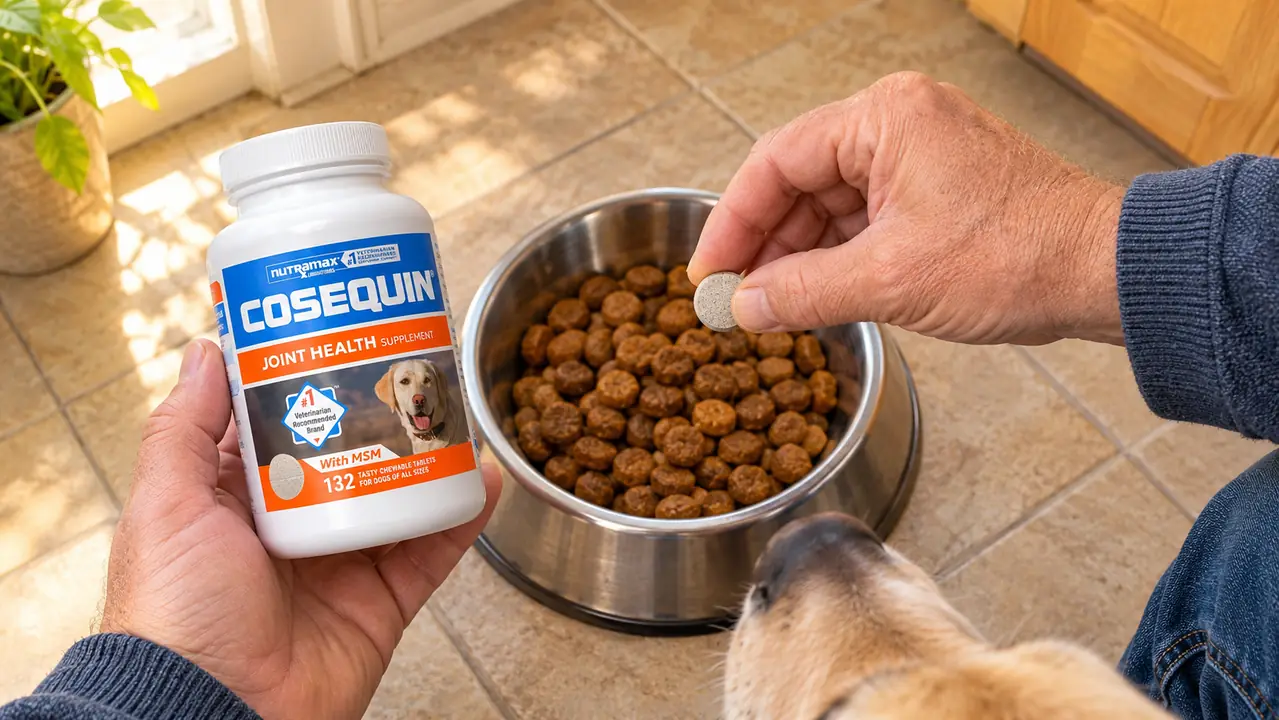
Our routine is boring, which I think is the point. After Bodhi eats breakfast, he gets his tablets in a small dish on the counter, and I stand there and watch him take them because I do not trust a dog to eat something he has decided he does not want. He takes them dry, straight from the dish, and then he goes out to the yard. On the days I have forgotten, I know it by nine in the morning because he is slower on the stairs, or maybe I just notice it more because I am looking for it. Either way, seven months in, we have missed maybe six days total.
The bottle I buy is the 132-count chewable tablets. How long that lasts depends entirely on how much your vet tells you to give, which is based on weight, so I am not going to quote you a number that does not apply to your dog. What I will say is that a single bottle carried us through a good stretch of this period, and I now buy on a schedule rather than waiting for the dish to get low, because the two weeks I let it run down were the two weeks Bodhi was most sluggish.
Where it fits in the day matters more than I expected. Early on I tried giving them in the evening with dinner and I could not tell you whether they did anything, because by then I was watching for changes at the end of a long day when he was already tired and lying on the cool tile. Moving them to the morning gave me a clean read: he got the tablets, then he had to do the stairs, and I could see the difference within an hour or two.
What's Actually in the Tablet
The label is short and specific, which I appreciate. The actives are glucosamine hydrochloride, listed with the designation FCHG49, plus sodium chondroitin sulfate, listed as TRH122, and MSM. If you have spent any time reading about dog joint supplements, those first two names will be familiar. Glucosamine and chondroitin are the pair most veterinary joint supplements are built around, and MSM shows up in a lot of them too. The product is a tablet, it is chewable, and the listing describes it as a joint health supplement. That is the full extent of what it claims, and I think that is honest of it.
Here is what it does not claim, and what I would be skeptical of anyone claiming for it. Cosequin does not treat arthritis. It does not cure anything. It supports joint health, in the same way a good diet and sensible exercise support joint health, and the reason I kept buying it is that the supporting showed up in a place I could measure, which was a set of wooden steps in my backyard. Nutramax Laboratories has been in pet health for over 25 years and is described as the top vet recommended retail joint supplement brand, and while I do not put much weight on that kind of line, I do put weight on the fact that our vet recognized the name immediately and did not wince.
One more thing about the form. These are tablets, not soft chews, and tablets have a texture that some dogs refuse. Bodhi is a golden retriever, so his position on food is that food is food, and he has never once turned one down. If your dog picks things out of his bowl and leaves them on the floor, tablet form is the detail that will decide whether this works in your house, not the ingredients.
What Changed, and When
The first three weeks were a whole lot of nothing. I want to say that plainly because the enthusiastic reviews tend to skip it. Bodhi took the tablets, ate his food, did his stairs, and showed me no difference at all. I kept going because our vet had told me to give it two to three months before judging it, and because stopping at week three would have meant I learned nothing.
Somewhere around week five or six, I noticed that he was coming down the back steps in one motion instead of two. Before that he had been doing this careful thing where he puts both front feet down, pauses, then brings the back end along. It is not dramatic. Nobody watching from the street would have seen it. I saw it because I let him out roughly forty times a week and because I was looking. By about month three, the morning routine had changed: he was up off his bed and at the door without the long stretch and the little groan, and the groan is the thing I had stopped hearing without realizing it had gone.
Month six was the honest test. We did a longer trail in the hills above town, maybe four miles with some climb, and he was tired at the end but he was not sore the next day. Before we started this, a walk that long would have bought us two days of slow stairs. I am not going to tell you a tablet did all of that, because he also lost a couple of pounds and we started walking shorter and more often. But the combination held, and the tablet was the only new piece in the first couple of months.
The Parts That Weren't Perfect
It is not cheap and it is not a one-time purchase. This is a daily thing with no end date, so the real question is not whether it works but whether it works well enough to keep buying, month after month, alongside everything else your dog needs. For us the answer was yes, but I made that call at month four, not month one, and I would have stopped if month four had looked like month one.
The car is where I got no help at all. Bodhi used to launch himself into the back of the SUV without touching the bumper, and after this he still needed a hand or a ramp, so we bought a ramp and I now consider it a permanent piece of equipment. If your dog's main struggle is jumping into a vehicle, a supplement is not going to solve that this year. A ramp will, this week. The tablet is playing a longer game than that.
And the honest caveat: I cannot prove causation. Seven months, one dog, no control group. He also turned nine, he also lost weight, and he also gets walked differently than he did a year ago. What I can tell you is the timing lined up with what our vet predicted, the changes stuck around, and nothing else in our routine changed in the first two months.
What I Liked
- Chewable tablet form that most food-motivated dogs take straight from the dish
- Built on the familiar glucosamine and chondroitin pair, plus MSM
- Our vet recognized the brand immediately and had no objection
- Noticeable reduction in morning stiffness by roughly month three
- 132-count bottle keeps the routine going without constant reordering
Where It Falls Short
- Daily cost that never ends, so it needs to earn its place by month four
- Tablet texture, not a soft chew, so picky dogs may refuse it
- No help at all with jumping into the car
- Nothing happens in the first few weeks, which is when a lot of people quit
- Does nothing for an injury, a torn ligament or a dog that is limping suddenly
Somewhere around week five he came down the back steps in one motion instead of two. Nobody watching from the street would have seen it. I saw it because I let him out forty times a week.

What We Tried Alongside It
I did not run this as a single-variable experiment, and I want to be straight about that. Our vet suggested an omega-3 fish oil alongside the joint supplement, and we have been using one daily for most of this period. That is EPA and DHA support, the kind of thing a lot of owners use next to a joint supplement rather than instead of one, and I would not describe it as a joint treatment. It went in the bowl, Bodhi did not notice, and I have no idea how much it contributed. What I do know is that the pair of them is a cheaper monthly habit than the specialty diets I looked at.
I also spent an evening reading comparison writeups, because the joint supplement aisle is a confusing place and half the products look identical. If you are trying to figure out how Cosequin stacks up against the other big name in this category, my comparison of Cosequin versus Dasuquin covers the differences in what is in each one and who each is meant for. If you just want the background on why glucosamine shows up in every one of these products, the piece on why glucosamine helps active dogs is the plain-English version. Both were more useful to me than the reviews that just said five stars, my dog is a puppy again.
Who This Is For
This is for the owner of a middle-aged or older dog who has gotten stiff rather than sore. The dog who is slow getting up after a long nap, who hesitates at the stairs, who trots less than he used to but is not limping and is not favoring a leg. Medium and large dogs are where I see this most, and Bodhi at seventy-four pounds is right in the middle of that. It is for someone willing to give it daily and wait two to three months before deciding, which is a real commitment in a world where everything is supposed to work by Friday.
Who Should Skip It
Skip it if your dog is limping, yelping, holding a leg up, or went lame after a specific moment at the park. That is a vet visit before it is a supplement decision, and no chewable tablet is going to fix a torn ligament. Skip it if your dog is a picky eater who turns his nose up at anything with an odd texture, because tablets are exactly that. Skip it if you know yourself well enough to know you will not keep it up: an inconsistent supplement is money spent for nothing, and I would rather you save it. And skip it if you have not asked your vet, especially if your dog is on other medications or has a health condition, because I am a real estate agent with a dog and a set of stairs, not a clinician.
Seven months of stairs, and I am still buying the same bottle
Glucosamine hydrochloride, sodium chondroitin sulfate and MSM in a chewable tablet, 132 to a bottle, from Nutramax Laboratories. If your dog is stiff rather than injured, this is where I would start, after a call to your vet about the right amount for his weight.
Amazon Check Today's Price on Amazon →