
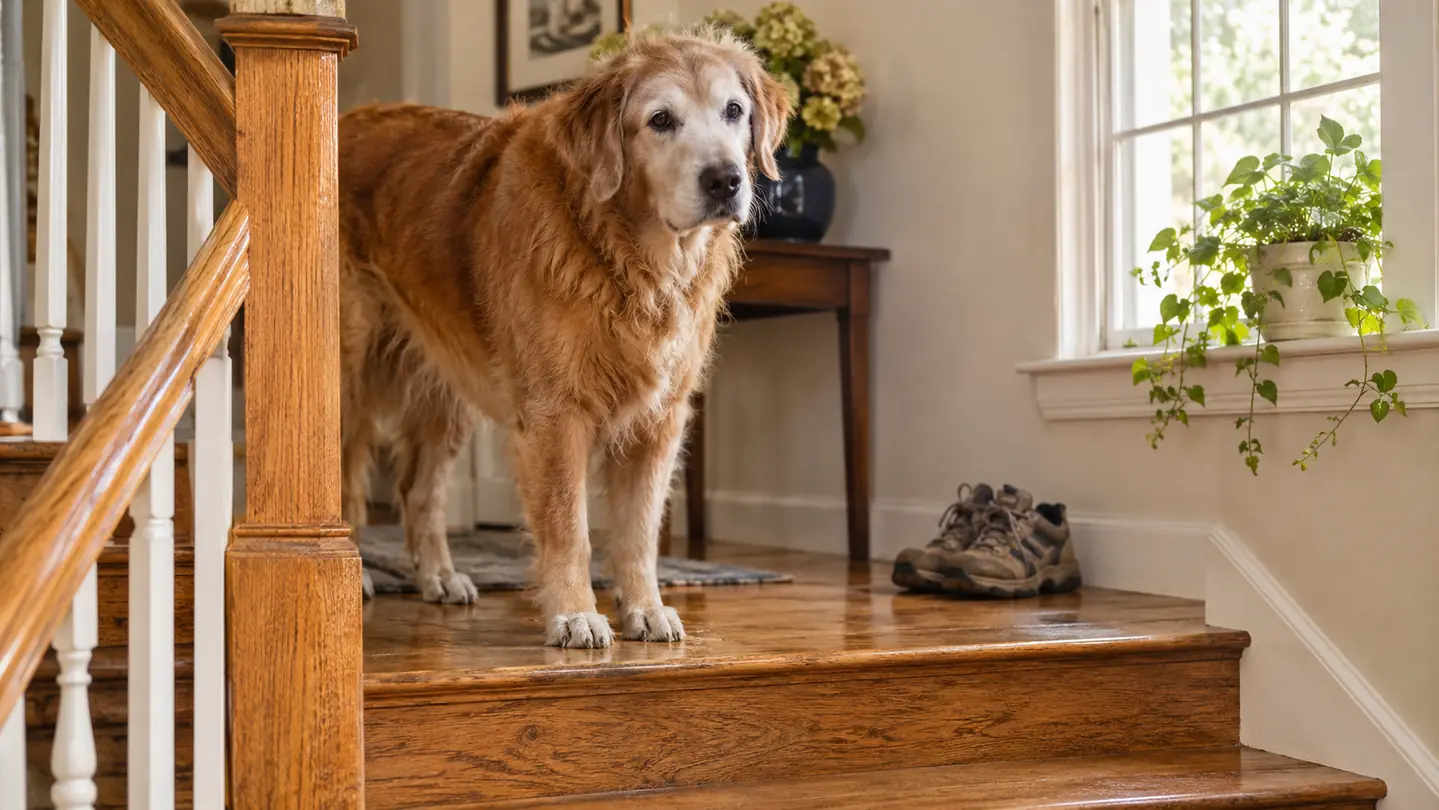
The first time I used a sling on Bodhi, I did it wrong. He had stopped halfway down our back steps, hind end sagging, and I looped the strap under him the way I guessed it went, took the handle, and lifted before he had his feet set. He sat down on the step and looked at me. I sat down next to him, read the one page user guide that came in the box, and the second attempt went better. That is this whole review in miniature. The tool is simple. Using it well takes five minutes of paying attention and a dog who is willing to let you help.
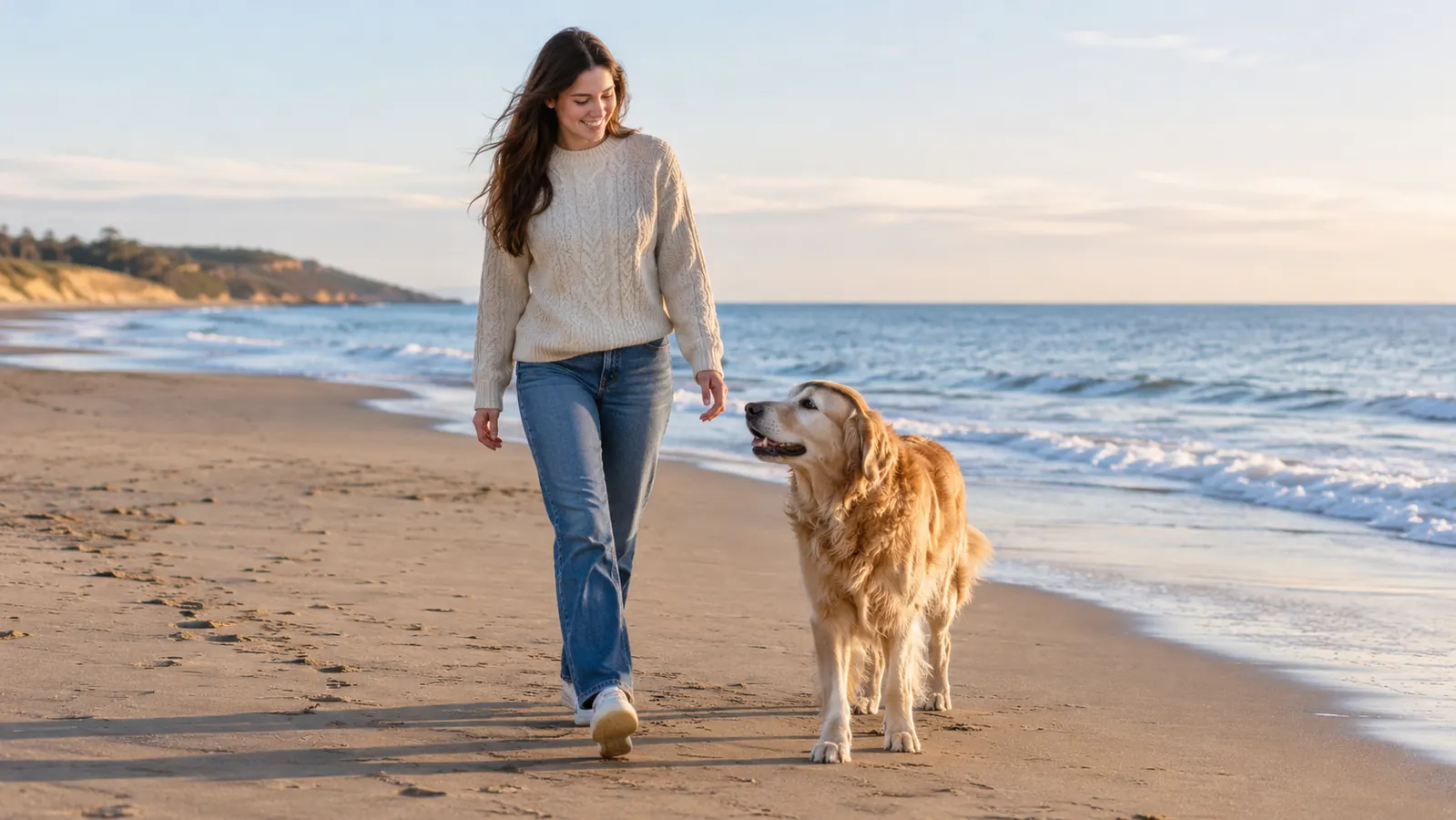
This is my honest review of the PICK FOR LIFE adjustable dog sling for large dogs, the hind leg support sling I bought for a nine year old golden retriever who weighs around 74 pounds. I am not a vet. I am a real estate agent in Ventura County who hikes local trails on weekends and walks the beach most mornings, and Bodhi has been my partner on both since he was a puppy. Around age eight he started getting stiff after long walks and slow on the back stairs down to the yard. That is what sent me looking at mobility gear in the first place. What follows is what I noticed over roughly two months of regular use, including the parts I wish the listing had said out loud.
I want to be clear about the shape of this review. I am not going to tell you this sling gave my dog his youth back, because it did not. He is nine. He is going to stay nine. What I can tell you is where it helped, where it did not, and what I would ask a vet before spending money on one. If you want a page that only lists the good parts, this is not that page.
The Quick Verdict
A plain nylon sling with padded handles that does one job well: it takes some of the weight off a big dog's back end while his own legs keep working. It is not hands free, it is not a wheelchair, and it is worth the shelf space anyway.
Amazon Check Today's Price →For the dog who still wants the walk but needs a hand at the stairs
The PICK FOR LIFE sling weighs 8.8 ounces, folds into the storage bag it ships with, and lives in my cargo area next to the beach towels. It is the least exciting thing I have bought for Bodhi in years and the one I reach for most.
Amazon Check Today's Price on Amazon →How I've Used It
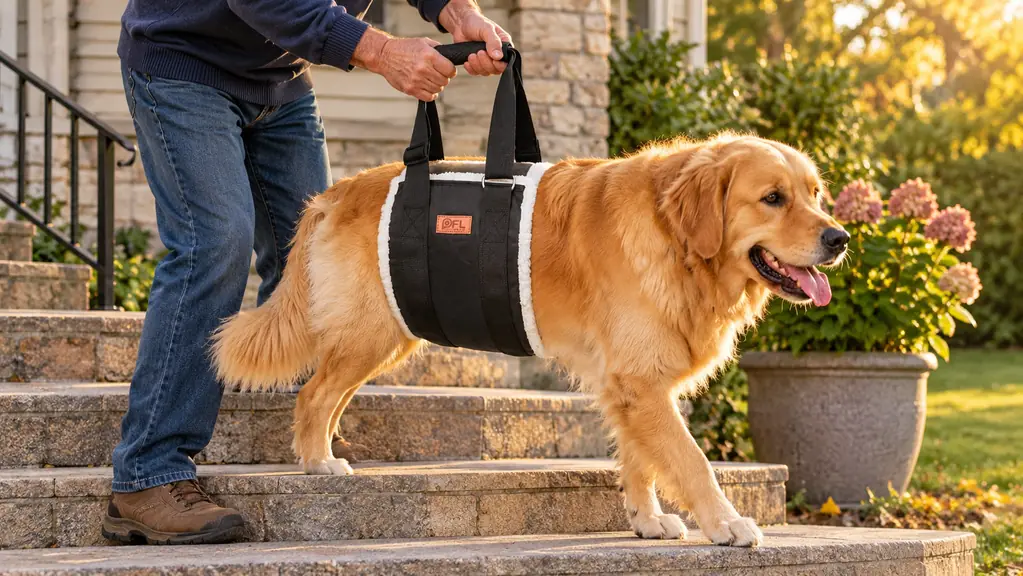
The sling lives in the back of my SUV now, folded into the little storage bag it came with, along with the extra handle and the user guide. It weighs 8.8 ounces, which is about the same as a full water bottle, so I do not think about it until I need it. In a normal week I use it four or five times. The back steps down to the yard, the rear hatch when we come home from the beach, the parking lot at the vet, and the last quarter mile of any trail where Bodhi decides he has had enough.
The way it works is not complicated. You pass the sling under the dog's hindquarters, take the padded handle, and stand beside him. When he pushes up, you take a share of the weight. He is still doing the walking. You are removing the part of the load that makes him hesitate at the top of a step. The first week I probably carried more than I needed to, because I was nervous about him falling. By the second week I had learned to let him set the pace and only add lift when he actually faltered.
I wash it about once a week. It is nylon, the care instructions say machine wash, so it goes in with the dog towels and comes out fine. Bodhi finds something to roll in at the beach on roughly every trip, so this matters more than it sounds. The padded handles are the detail I did not expect to care about. After ten minutes of holding a strap with part of a 74 pound dog's weight on it, padding stops being a comfort feature and becomes the difference between finishing the staircase and stopping halfway.
One practical note about where we keep it. It stays in the car because that is where the hard moments happen, the hatch and the vet lot. If I only needed it for the back steps, it would live by the back door instead. Choose the spot where your dog hesitates most and leave the sling there, because a mobility aid you have to go find is a mobility aid you will not use.
What Nobody Tells You Before You Buy
The thing the listing does not spell out is that the sling is not hands free and it is not a replacement for your dog's legs. You are in the loop the entire time. That is fine for a 74 pound dog and a person with working arms. It is not fine if your shoulders are bad, or if your dog is much heavier than mine and cannot help at all, because then you are lifting rather than supporting, and that is a different job with different risks.
The second thing is that this supports the back end only. Bodhi's front legs have to be strong enough to do their half of the job. On the days his hips are stiff, that works well. On the days he is stiff all over, the sling is not enough and we do a short flat walk instead of the stairs. If your dog's front legs are the bigger problem, a sling under the hindquarters is solving the wrong half of the equation.
The third thing is tolerance. Some dogs hate anything under the belly the first time. Bodhi is a patient dog and he still gave me a look that first afternoon. We practiced in the living room on the carpet with the sling under him and no lifting at all, just a few seconds and a treat at a time. Two sessions and he was fine with it. A dog who panics will need more practice than that, and a dog who panics badly may need a different setup entirely.
One more note, on the listing itself. The copy uses the word harness in a few places. What arrives is a sling you hold by a handle, not something the dog wears while you walk with your hands free. The paperwork is thin as well. The listing describes a 7 day warranty and a drawstring closure, and the user guide is a single page. Read that page before your first attempt rather than after, which is the mistake I made on the back steps.
What I Tried First, and Why This Stuck
Before the sling I tried a towel under the belly, which is what everyone suggests and what almost nobody enjoys. It works for about ten feet. Then the towel bunches, your knuckles hit the steps, and the dog looks at you like you have lost your mind. I also tried walking Bodhi on a short leash with a hand under his chest on the stairs, which is worse, because now neither of us has a free hand and my back takes the load.
I looked at a support harness with a handle on the back, the kind the dog wears for the whole walk. It is a good tool for some dogs. For Bodhi it was too much gear for a problem that lasts ninety seconds at a time, and putting it on him when he was already stiff felt like adding a step. The PICK FOR LIFE sling wins on speed. It goes under him, we go up, it comes off, and it is back in the bag before he has finished shaking.
A cart, or a set of wheels, was the other option I read about. That is the right answer for a dog who cannot bear weight, and it is a completely different purchase with a completely different set of measurements to get right. Bodhi is not there. He walks a mile and a half on the beach most mornings. He needs help at the edges of the day, and the sling is sized for the edges of the day.
Where It Genuinely Helped
Our house has a set of back steps down to the yard, and those steps are where the sling earned its place. Before, going down was a slow negotiation. He would stand at the top, shift his weight, take one step, stop, and look back at me. Now I stand beside him with the sling under his hips and we go down at close to a normal pace. The stairs did not get easier for him. He stopped bracing at the top, because he knows the lift is there.
The rear hatch of my SUV is the other place it earns its keep. He used to launch himself in and land hard on his front legs. Now I put the sling under him, he steps up with his front feet, and I take his back end. Same dog, same vehicle, much softer landing. If you have an older big dog and a car they have to climb into, this is probably the single best use of the thing.
The third place is the turnaround on a trail. The moment Bodhi decides he is finished is usually a mile from the truck, and that mile used to be miserable for both of us. With the sling folded in my daypack, I can give him support for the last stretch without carrying him, which I cannot do and should not do at 74 pounds. He walks out on his own four feet. I help. That is the whole value.
It also made the vet parking lot less of a production. Getting him from the car to the door on a slick floor used to take two people and a lot of coaxing. One person and a sling is enough, and he is calmer when he is not scrambling for traction.
Where It Falls Short
My grip is the weak link, not the sling. Holding a handle with part of a 74 pound dog's weight on it for the length of a staircase is fine. Holding it for a quarter mile of soft sand is not, and I have paid for that in my forearms the next day. In practice this is a short distance tool, whatever the idea of it suggests when you order.
Sizing is a guess. The listing calls it Large and offers a breed recommendation rather than a measurement range, so you are buying on faith that it fits your dog. It fit Bodhi. A much bigger dog, or one at the small end of large, would be a question mark, and there is no chart to check against. If your dog is near the edge of the size in either direction, order assuming you may be sending it back.
The most important limitation is one I would want a friend to say to my face. This does not treat anything and it does not make a stiff dog less stiff. It takes weight off for the minutes you are using it, and then you put it away. The reason it works for us is that we changed other things too, including what our vet recommended for Bodhi's joints and how far we walk on his harder days. The sling is support. Anyone selling it as more than support is overselling, and I say that as someone who likes the product.
What I Liked
- Takes real weight off the hind end on stairs and getting in and out of the vehicle
- Light enough at 8.8 ounces to keep in the car or a daypack and forget about it
- Padded handles that stay usable for a full staircase
- Machine washable nylon, which matters with a dog who finds something to roll in
- Packs into the included storage bag with the handle and the user guide
Where It Falls Short
- Not hands free, a person has to hold it the whole time
- Supports the back end only, the front legs still have to do their share
- Vague sizing guidance on the listing, and Large is the only size offered
- Thin documentation and a 7 day warranty description
- Grip fatigue limits how far you can realistically use it
The sling did not give Bodhi his stairs back. It gave him a reason to stop bracing at the top of them, which turned out to be the same thing.
What I'd Ask Your Vet Before You Buy
Before you spend anything, get a vet to tell you what you are actually supporting. There is a difference between a dog who is stiff and weak and a dog who is in pain, and a sling under the hips does nothing for the second one except make it easier to keep moving a dog who should be resting. Our vet was the one who told me to think about the sling as a way to keep Bodhi active on the days he can be active, not as a way to push through the days he cannot.
Ask specifically how much weight the dog should be carrying. I assumed I should take as much as possible. Our vet's answer was closer to the opposite: let him carry what he can carry and add lift only when he falters, because the muscles are the thing you are trying to keep. That changed how I use it, and it is the single most useful sentence anyone has said to me about this gear.
Ask about the front half too, and about whether a sling, a support harness with a handle, or a cart is the right tool for your dog's specific problem. I looked at all three. The sling made sense for Bodhi because he can still walk and only needs help at the edges of the day. A dog who cannot bear weight at all is a different conversation, and your vet should be the one having it with you.
Who This Is For
This is for the person with a big dog who can still walk but has started hesitating on stairs, in doorways, or at the back of the car. It is for someone strong enough to hold part of the dog's weight for thirty seconds at a time, and who wants a tool that lives in the car without taking up space. If your dog is stiff after long walks, slow on the back steps, and still eager to go, this is the stage where the PICK FOR LIFE sling makes sense. It is also for the person who wants to keep their dog on the trail a while longer, at whatever distance the dog can still manage on his own.
Who Should Skip It
Skip it if your dog cannot stand without help, if the front legs are the problem, or if you have shoulder or grip issues that make holding weight unsafe for you. Skip it if you want something the dog wears on a walk so your hands stay free, because this is not that. Skip it if your dog will not tolerate anything under the belly after a fair try, and skip it if you are looking for something that fixes the underlying issue rather than supporting a dog through the parts of the day that are hard. And if you have not had a vet look at your dog yet, do that before you buy anything at all.
The least exciting thing in my car is the one I use most
If your dog is at the stage Bodhi was at, hesitating at the top of the stairs and slow getting into the car, this is a small tool that makes those two minutes better. Mine lives in the cargo area with the beach towels and the spare leash.
Amazon Check Today's Price on Amazon →