
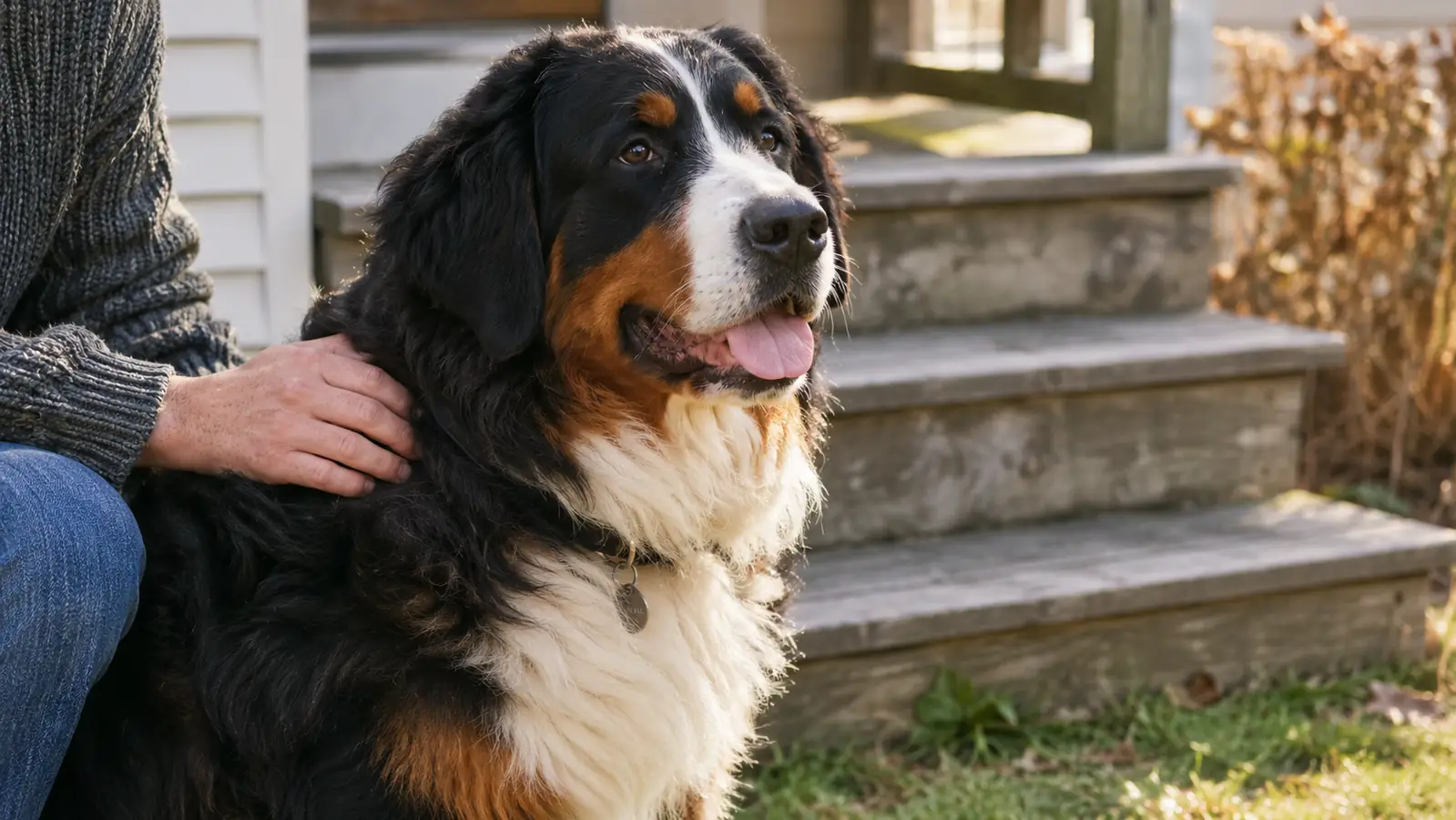
Bodhi started stopping on the back steps. Not falling, not yelping, just stopping, one paw on the landing, deciding whether the second step down to the yard was worth the trouble. He is nine, a golden retriever, about seventy four pounds, and he has been my hiking partner since he was a puppy. Those steps used to be nothing. Now they were a decision he made slowly, every single time, and I could feel him thinking about it while I stood there pretending not to watch.
That is how I ended up in my kitchen with a small jar of Super Snouts Joint Power in one hand, reading the label and realizing I did not actually know what to do with it. Do you sprinkle it on top of the kibble? Mix it in? Morning meal or night? Does it matter if he licks the bowl clean in ninety seconds flat? I asked our vet, I asked a friend who has kept working dogs for thirty years, and I got a few things wrong before I got them right. What follows is the routine I wish someone had handed me on day one.
One ingredient, and you can pronounce it
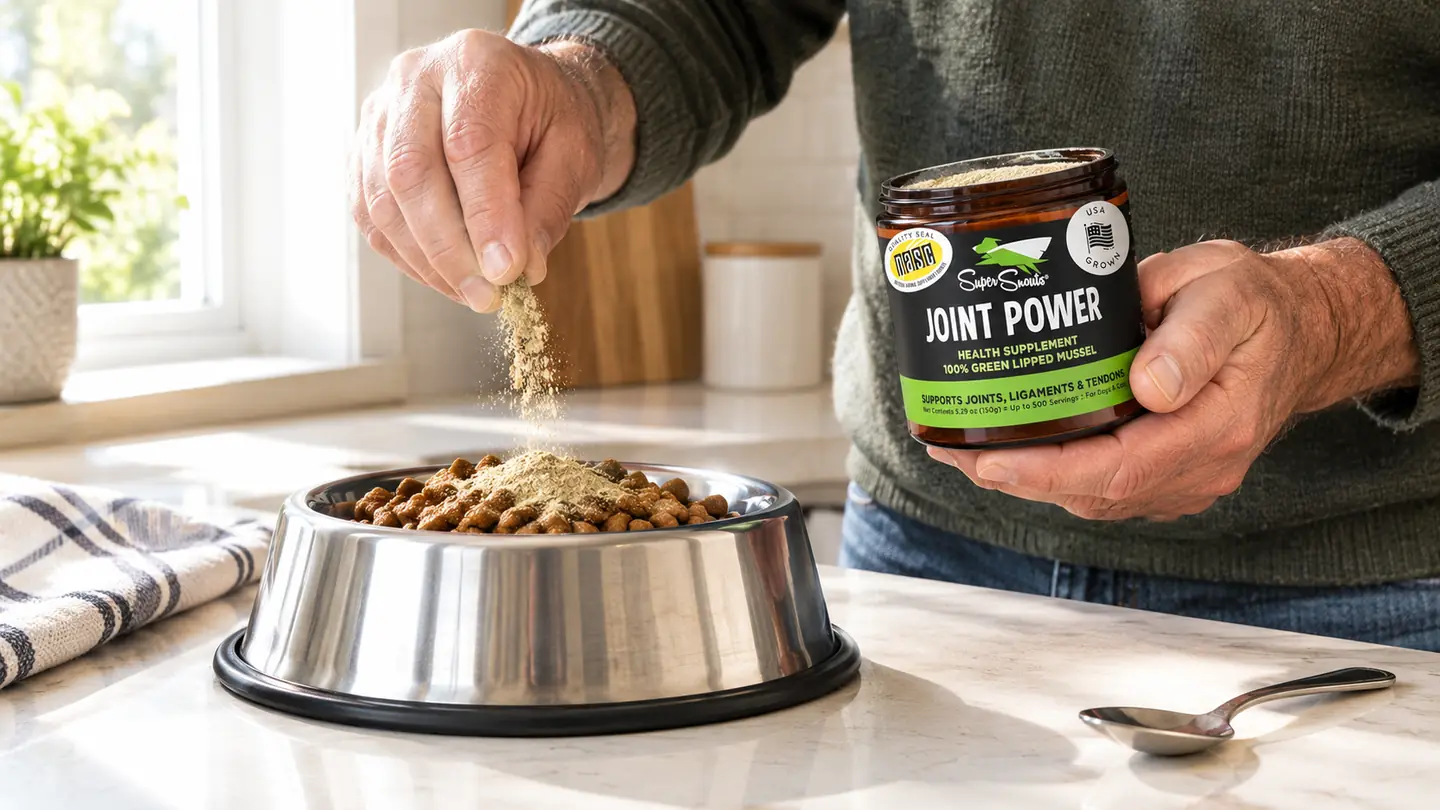
Super Snouts Joint Power is a single ingredient powder, green lipped mussel from New Zealand, made to go on food for dogs and cats. No twelve item blend to research, no flavor system to argue with. If you want to read the label yourself before you start a routine, it is right here.
Amazon Check Today's Price on Amazon →Step 1: Talk to your vet before you open the jar
I know. Nobody wants the first step to be a phone call. But a joint powder is not a treat, and the fact that it is sold without a prescription does not make it weightless. I called our vet, told her I was looking at Super Snouts Joint Power and asked whether it was a reasonable place to start. She asked four things back: how old Bodhi is, how much he weighs, what specifically I had noticed, and what else he was already getting. Write those four answers down before you dial, because you will forget at least one of them the moment you hear a hold tone.
The other thing worth saying out loud: green lipped mussel comes from the sea, so if your dog has ever had a reaction to shellfish, or a sensitive stomach that shows up out of nowhere, that is a conversation to have before the first sprinkle rather than after. Our vet also wanted to know about the fish oil Bodhi takes, because people stack supplements without telling anyone and then wonder why the dog is off his food.
And be honest about what you are hoping for. I told our vet I wanted Bodhi to take those back stairs the way he used to, and she told me plainly that a supplement supports a joint, it does not rebuild one, and if I was expecting a two year old dog again I should adjust my expectations first. That was not the answer I wanted. It was the answer that made the next three months sane, and it is the reason I did not quit on week three when nothing looked different yet.
Step 2: Measure the amount your vet gives you, then write it down
The Super Snouts jar does not come with a chart that fits every dog, because a nine pound terrier, a seventy four pound retriever and a cat are not the same animal. Our vet gave me a starting amount based on Bodhi's weight and told me we could adjust after a month. I wrote it on a strip of masking tape and stuck it to the lid, because the second week is exactly when you start guessing, and guessing is how a fair test turns into a vague feeling.
Whatever you use to measure, keep it the same one. Same spoon, same drawer, level, every time. I started out eyeballing a pinch, and I honestly cannot tell you whether Monday's pinch and Thursday's pinch were remotely the same amount, which means I wasted the first ten days of a routine I was trying to evaluate. Consistency is the entire point of a powder you add daily. A big day here and a small day there is not a routine, it is a habit with holes in it.
One more thing about the jar itself. It is 5.29 ounces and small enough to sit next to Bodhi's food container on the counter instead of disappearing into a cabinet behind the rice. That sounds trivial. It is not. The supplements that actually worked for us are the ones I could reach without moving a chair, and the ones in the back of the cabinet are the ones I gave up on.
Step 3: Mix it into food your dog actually finishes
Powder sprinkled dry on top of kibble mostly ends up at the bottom of the bowl. Bodhi would eat the top layer, lick at the middle, and leave a damp clump stuck to the side, which meant he was getting some fraction of what I thought I was feeding him. Now I put his kibble in the bowl, add a couple of tablespoons of warm water, sprinkle the Super Snouts powder over it, and stir it through so there is nothing left to avoid.
Warm water, not hot. A splash of something he already likes works too, as long as it is dog safe and does not turn every meal into a cooking project. The goal is a bowl that gets finished in one go, because a bowl that sits on the patio for an hour in the Ventura heat is a bowl that grows things, and a dog who eats it anyway is a dog with a stomach ache.
Watch the first few meals closely. Some dogs inhale anything you set down. Some dogs smell a change from the doorway and walk away offended. If yours is in the second group, start with a smaller amount than your vet named, let the new smell become ordinary, and work up to the full amount over a week or so. That was our vet's suggestion and it saved us a run of uneaten breakfasts and one very dramatic stare from the hallway.

Step 4: Pick a time you are actually home, and do not move it
Joint support is a slow daily thing, not a pain pill you reach for when the stairs look hard. The mistake I made early was judging it at day four. Day four tells you nothing at all. The changes people describe happen over weeks, and you cannot separate real change from a good mood on a Tuesday unless the routine has been boringly identical the entire time.
So pick the meal you are reliably present for. In this house it is dinner, because breakfast is a rushed business involving a leash, a travel mug and me already late to show a house. Dinner is calm. Dinner is when I am standing in that kitchen anyway. The jar lives next to the food, I measure the same amount, I stir it in, and that is the whole ritual. It takes about forty seconds.
Travel and weekends away are where routines quietly die. If Bodhi comes with me, the jar comes with me and it goes in the bag with his food instead of staying on the counter. If he stays home, the amount is written on the lid and the tape does not move. Missing a day here and there is not a crisis. Missing every third day means you are not really running a routine, you are running a suggestion.
Step 5: Track what changes, and be honest when nothing does
I kept a note on my phone. Nothing fancy, one line a week: how he did on the back stairs, how far we walked on Saturday, whether he needed a hand getting into the back of the SUV. Before that, I was comparing him to a version of Bodhi I remembered from four years ago, which is not a fair measurement of anything except my own nostalgia.
Take a short video once a month, on the same stairs, from the same angle. It feels uncomfortable, like you are documenting decline, but it is the only way I found to know whether the thing I was doing was helping. Memory is generous in both directions. Video is not, and neither is a note that says he hesitated twice, where last month you did not write anything down at all.
And if your dog shows nothing after a couple of months, say so out loud and go back to your vet. Some dogs respond to a supplement in a way you can see. Some do not, or the thing you are actually dealing with needs something else entirely: a different food, a nail trim, a ramp, or a real conversation about pain management. A powder is one tool in the drawer. It is not the drawer.
By week six, Bodhi was taking the back steps without stopping to think about it. That is not a cure. That is a dog who is more comfortable, and around here we take that.
What Else Helps
Joint powder was never the only thing we changed, and I would be lying if I gave it all the credit. The first change was weight. Bodhi was about four pounds heavier than our vet wanted, and four pounds on a dog with sore hips is not a small number. Cutting back the training treats and stretching our walks out did more for those back stairs than any jar did. If your dog is carrying extra weight, start there. It costs nothing and it is the highest leverage thing on this list.
The second was the car. He used to launch himself into the back of the SUV like a deer and land hard on both front legs. Now I open the hatch, he puts his front paws up, and I lift his back end. It takes four seconds and it saves him a jarring landing twice a day. A ramp or a set of folding steps does the same job if you would rather not lift, and either one is cheaper than a bad landing.
The third was the fish oil. Bodhi already took an omega-3 with EPA and DHA, and our vet was happy for him to keep taking it alongside the mussel powder from Super Snouts. I think of it as support on a different channel, not a substitute for the powder and not the other way around. If you are stacking two things, tell your vet both names, including the exact product, not just the category.
The fourth was shorter, more frequent walks. Beach walks most mornings, twenty to thirty minutes, sniffing allowed, no agenda. Then a longer trail on Saturday if he seems up to it. And nails trimmed on a schedule, because long nails change how a dog stands and nobody thinks about it until the vet points at it and you feel like a fool.
We also keep a hind leg support sling by the door for bad days. It loops under his belly and lets me take weight off his back end on the way to the car without hauling him. I have used it twice in six months, and both times it meant he still got to come with me instead of staying home. That is the whole argument for it.
Last, go back for a recheck. Our vet wanted to see Bodhi again after a couple of months, not because anything was wrong but because she wanted to feel the same joints she had felt in the spring and see whether her own notes matched mine. Bring your phone note and your video. A dog who is walked into an exam room cannot tell anyone what the last six weeks were like, but you can.
Start with the label you can read, then build the routine around it
Super Snouts Joint Power is one ingredient, green lipped mussel, in a 5.29 ounce jar that goes on food once a day. Ask your vet about the amount, measure it the same way every time, and give it long enough to be a fair test before you decide.
Amazon See the Joint Power jar on Amazon →